Building an accessibility program
Product: admin.webex.com
Role: Leader of Product Design | Programs @ Platform UX
Org: Webex by Cisco
2023 - Present
I lead the strategy, execution, and momentum of Webex’s Accessibility Program, with a clear vision: to make our products accessible by default. My approach focused on building lasting systems, not one-time fixes, ensuring that accessibility became part of how we work, not just what we ship.
The testament to how small steps toward progress can have a compounding impact (as of Q3 FY24)
6
Checklists released
24+
Designers & engineers trained
3+
Empathy building sessions conducted with people with disabilities
6+
Research studies conducted with differently-abled people
51
Components made accessible
9+
Months of accessible features Implemented
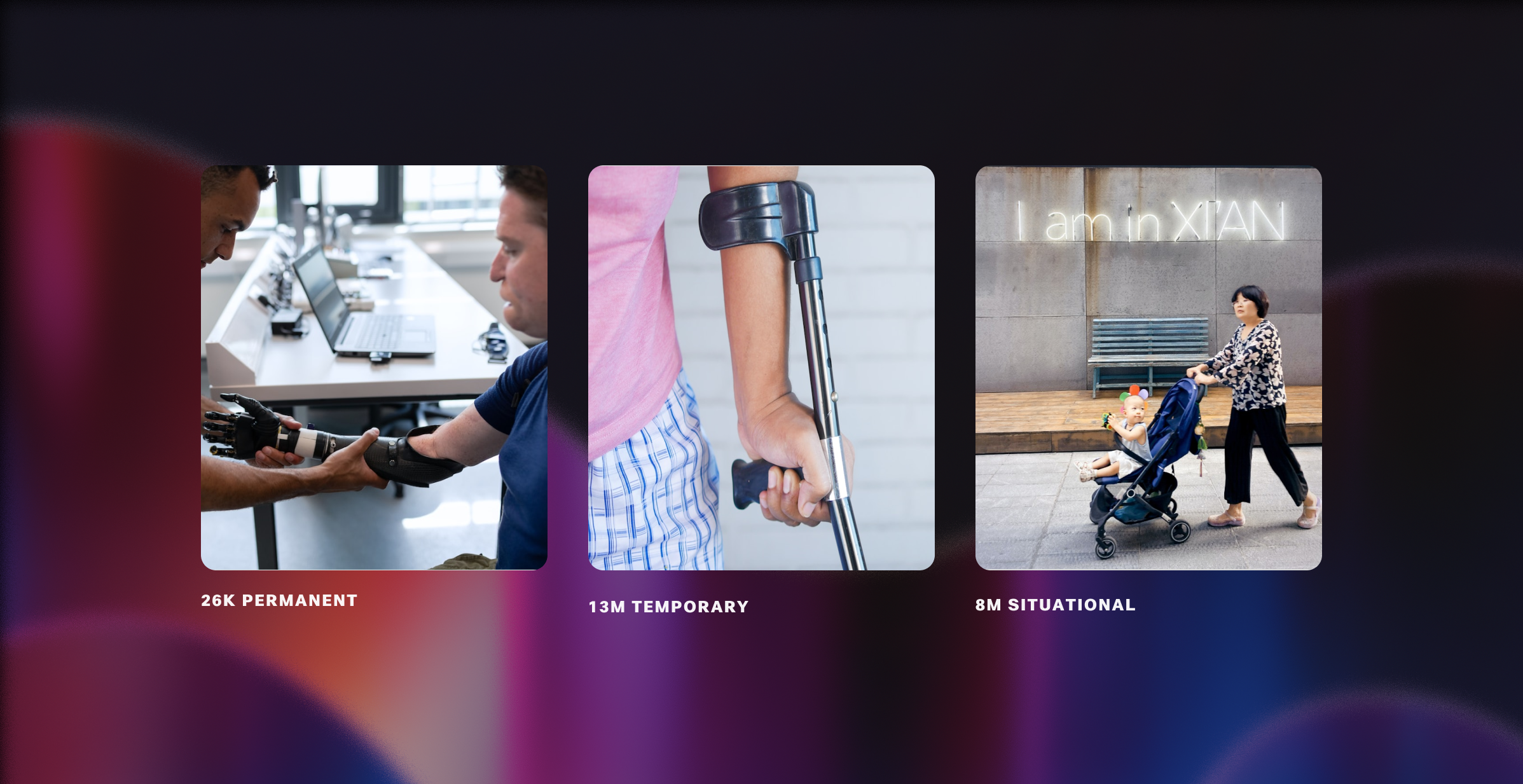
Any discussion of accessibility should start with people.
The term Accessibility means to provide equal access to people with disabilities.
Many people think that disabilities only involve obvious physical conditions, but disability actually encompasses a wide range of people. This includes individuals who may be permanently, temporarily, or situationally unable to use a space, work, or function properly. So, it's important to remember that disability can affect anyone, including yourself, a family member, or a colleague.
Advocating for an accessibility initiative
3X Increase
By 2023, the number of people with disabilities employed will triple due to AI and emerging technologies reducing barriers to access.
Source - Gartner report
20M+
people in the United States have a permanent, temporary or situational impairments
Source - United States Census Bureau
1 in 4
people in the US market have a disability.
Source - United States CDC
1,000,000,000
people globally live with a disability.
Source - World Health Organization

The catalyst to our advocacy
We got a lucky break in our accessibility advocacy when Wells Fargo made it clear they wouldn’t move forward without full compliance with Federal accessibility standards. That external pressure, combined with our internal drive to build more inclusive products, gave us the momentum we needed to launch the Accessibility Program.
This effort also aligned deeply with Cisco’s mission to Power an Inclusive Future for All, giving our work not just urgency, but meaningful purpose across the organization.
As the saying goes, “luck is what happens when preparation meets opportunity.”
We had already laid the foundation through initial scoping, internal advocacy, and early team alignment, so we were ready to meet the moment and drive lasting change across the product experience.
Getting started still felt impossible
Overwhelming timelines
Initial planning revealed a daunting timeline, with some changes projected to take years to implement
Team transitions
Should we start a new initiative when there is no one historic to guide us?
Lack of program management
The absence of a dedicated person responsible for accessibility, which meant that without clear ownership, efforts were not mobilized as effectively as needed to ensure success.
Guiding teams
With all the transitions and no real deadline, is this our highest priority?
Designers working in isolation
With all the transitions and no real deadline, is this our highest priority?
Complex and ambitious scope
The scope of the program was vast, involving retroactive fixes, process overhauls, and new feature requirements, all while ensuring no interruptions to ongoing product development.
Shift to a global library
Should we invest in this effort if it could be going away?
Prioritizing accessibility
With all the transitions and no real deadline, is this our highest priority?
Keep going? or pause?

And this is where our program was forged
To keep our momentum in accessibility and strike while the iron was hot, my leader, Kristin Harvey, took a bold step by resourcing accessibility as a dedicated design program. With product managers understaffed and engineering teams needing guidance, design stepped up to create the AX program.
I, alongside a few enthusiastic designers, was appointed as the accessibility lead to drive accountability and provide clear direction. Rather than wait for alignment to happen organically, we proactively defined what success looked like and structured our efforts around measurable, impactful improvements.

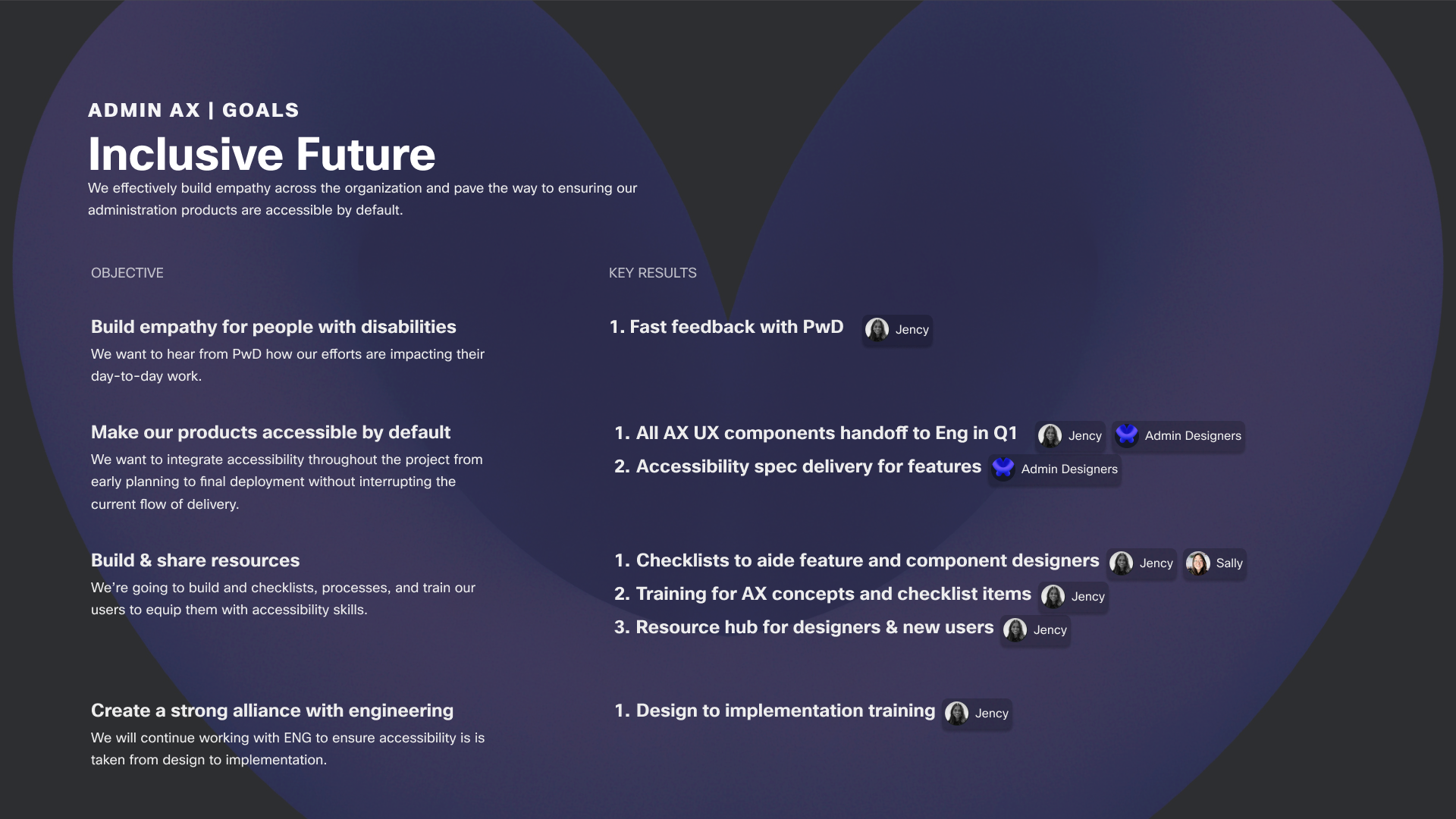
Our program is guided by 4 core principles:
We didn’t realize it early on, but defining clear design principles was the most crucial step in guiding our accessibility program. Without them, our efforts were scattered and reactive; with them, we had a shared compass to build inclusive experiences by design.
👨🦯
Build empathy for people with disabilities
We want to hear from PwD how our efforts are impacting their day-to-day work.
♿️
Make our products accessible by default
We want to integrate accessibility throughout the project from early planning to final deployment without interrupting the current flow of delivery.
👏
Invest in our people
We’re going to build and checklists, processes, and train our designers to equip them with accessibility skills.
🤝
Create a strong alliance with engineering
We will continue working with ENG to ensure accessibility is taken from design to implementation.
The Plan
As a platform that many teams build into, we realized that fixing accessibility bugs as they surfaced wasn’t enough. We needed a more strategic, sustainable approach. This led us to define two clear phases:
get accessible—to address foundational gaps
and
stay accessible—to embed accessibility into our ongoing design and development processes.
Stage 1: Get Accessible
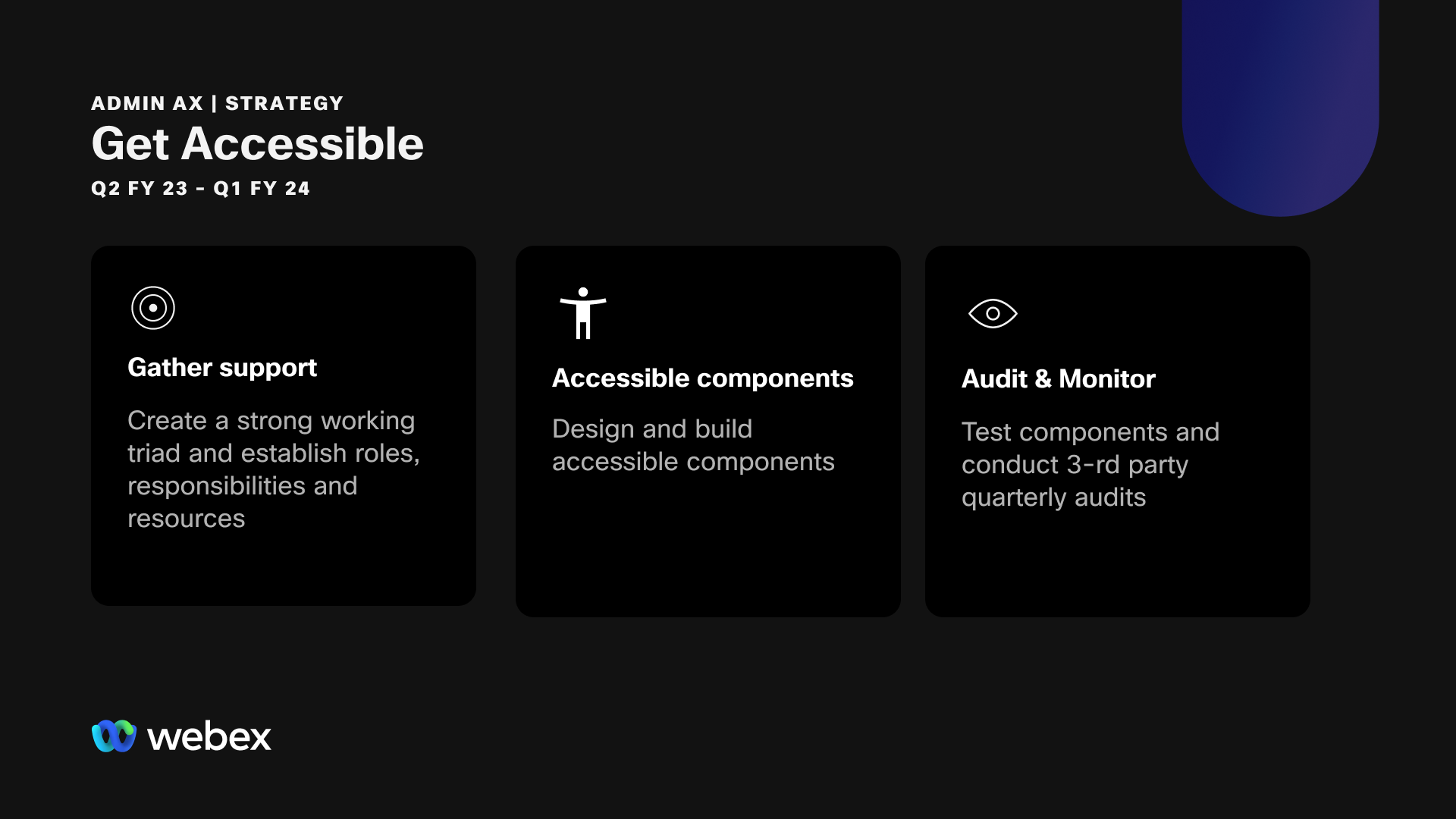
Since the conception of the program our focus has always been to build a sustainable accessibility process that helps model behavior while making strategic progress in improving our product’s accessibility.
All initiatives are lead by a triad of design, product and engineering leaders and step 1 was to mobilize the triad and align on strategy. Very early on the triad agreed to focus our efforts on building a strong foundation which includes having accessible components and a skilled workforce.
Our administrative platforms have core and other service teams that gild into it. Instead of training a select few experts, the AX program ensures all designers on our team gain practical experience.
Finally, our last focus was on setting up processes to audit and monitor our progress. This includes in-sprint testing for all our components by experts and 3rd party audits of our platforms.
Gather support
Some design teams within the Platform UX teams were already making efforts to provide accessibility specifications. Despite their efforts, the specifications were found to be inconsistent, only partially understood by designers, sometimes inaccurate, not given priority by the product team, and often confusing to engineers consuming them.
We didn’t want to build a program that was UX-driven and only for UX consumption.
By mobilizing support and setting up a strong triad of Design, Product, and Engineering leaders we created the foundation of a strong alliance that ensured that all product teams benefited from.
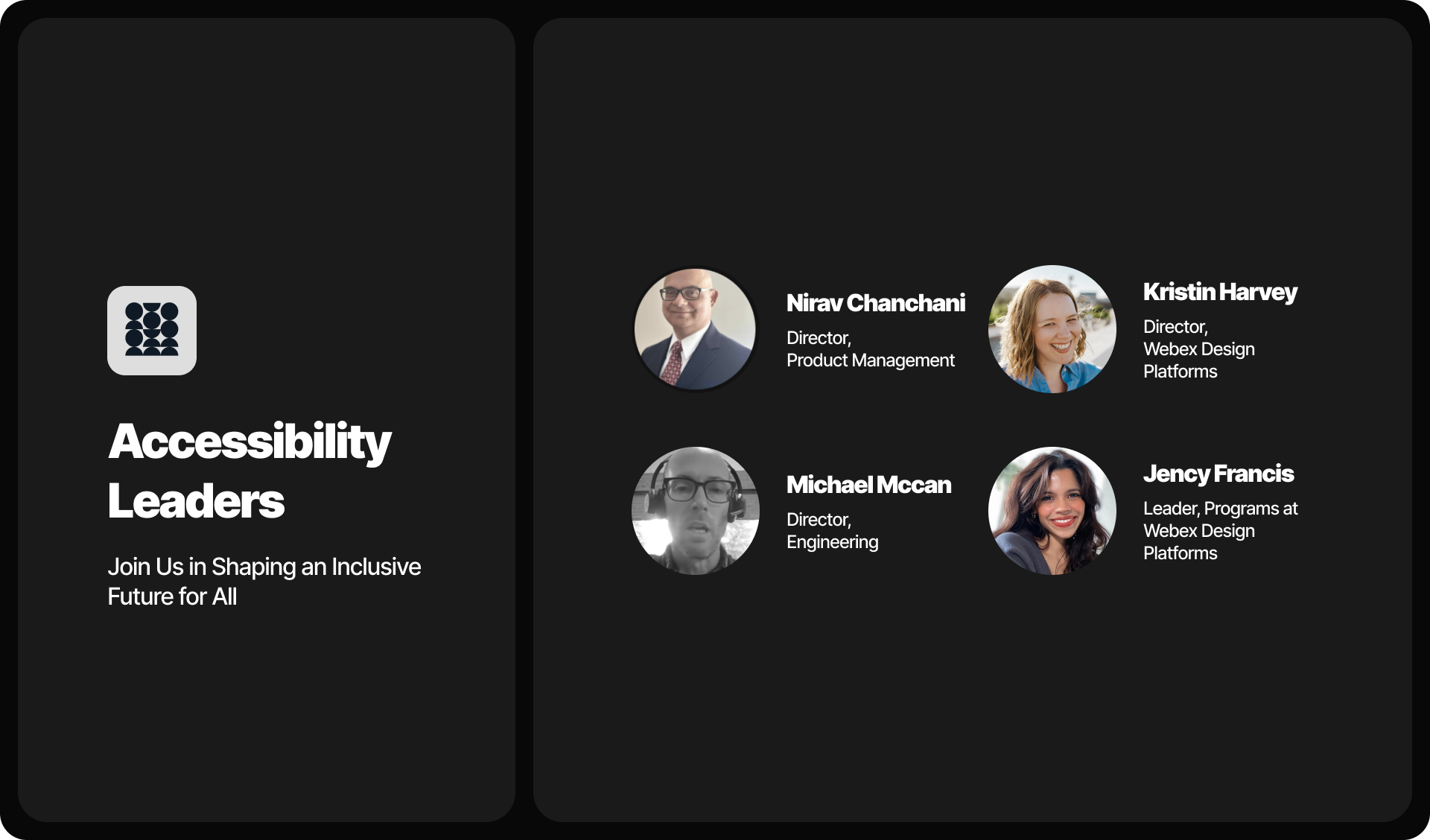
The AX program Triad 23-24Accessible components
Jumping into designing accessible components without any training can be overwhelming. And it doesn’t help that the terms are very jargon-like. Training a small group of designers would likely be the quickest way to meet compliance requirements. However, this would still leave us with an untrained team and ongoing accessibility issues with our products.
An alternative we couldn't support was waiting to train all designers and engineers before starting work on accessible components.
The happy medium we landed on was to train a few champions who would help review and simplify guidelines while simultaneously exposing designers to at least one component accessibility guideline.
Essentially using the component accessibility work as a hands-on training ground
Audit & Monitor
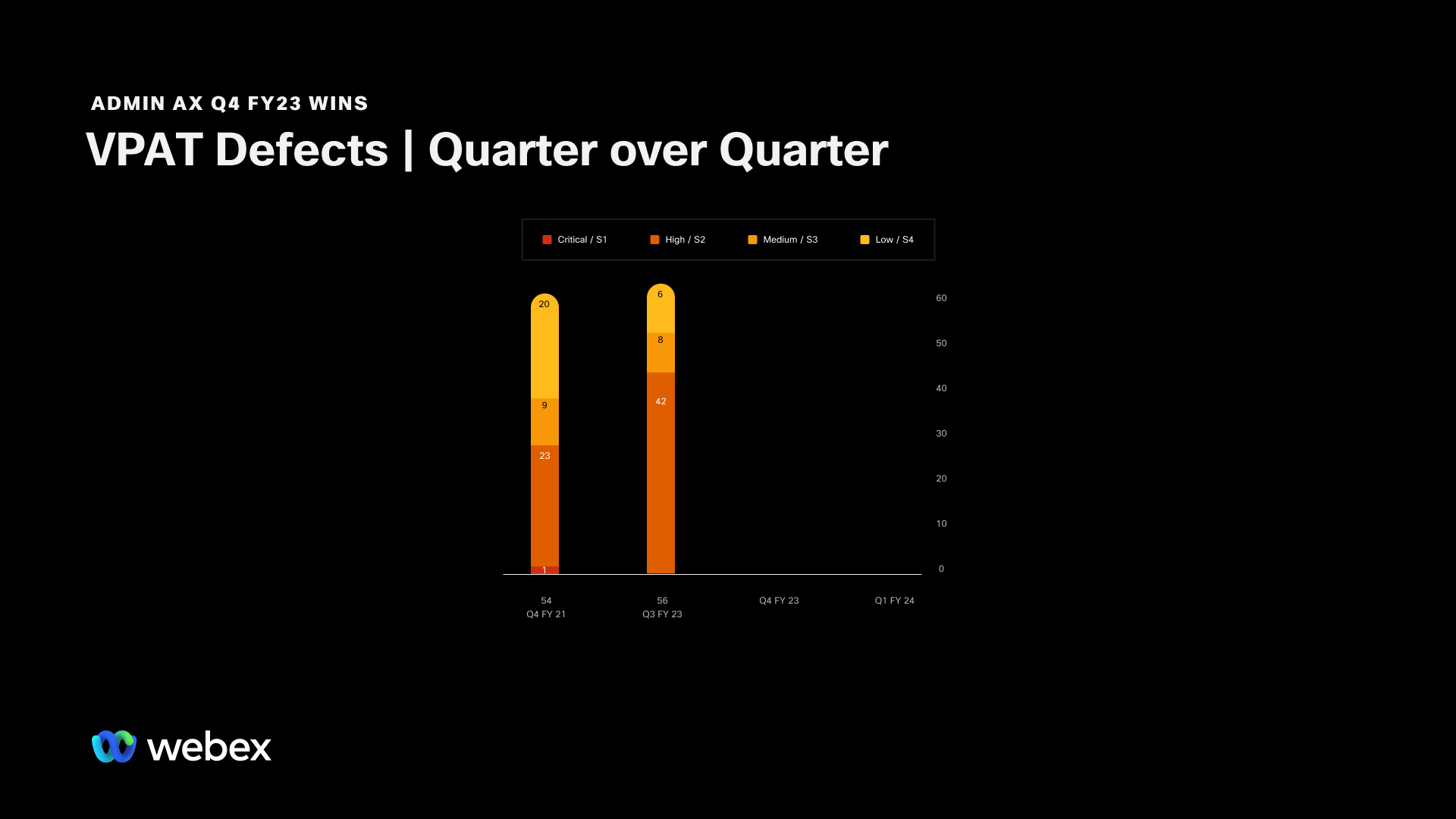
Quarterly VPAT
We wanted to ensure that the strategy we implemented made the impact we desired.
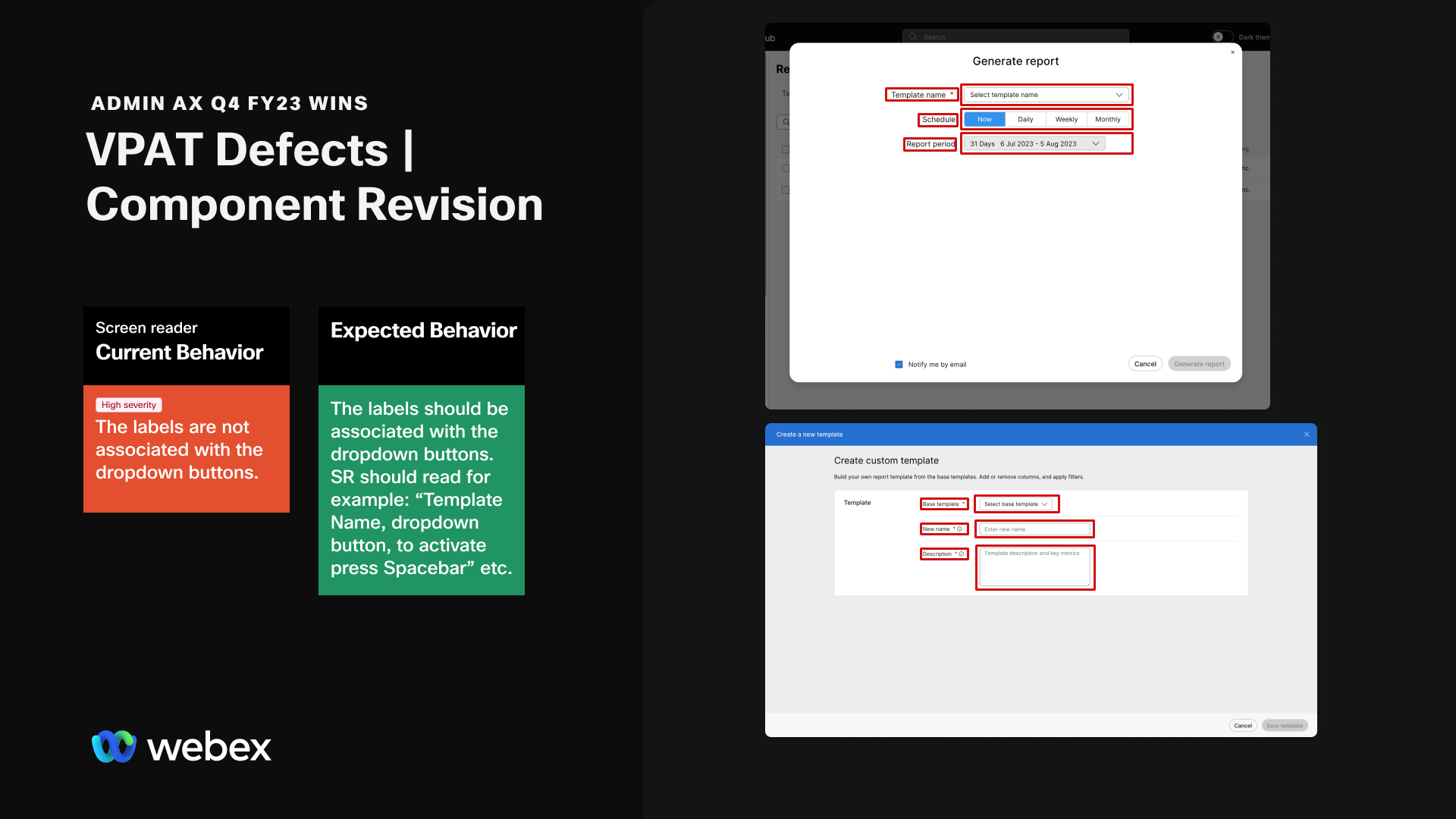
So along with creating & implementing accessible components, we added in 3rd-party audits and checks both for components and our entire site.
Each component is tested post-round1 of implementation and the DEI team runs the VPAT report for the entire site every Quarter
Quarterly Fast Feedback Sessions
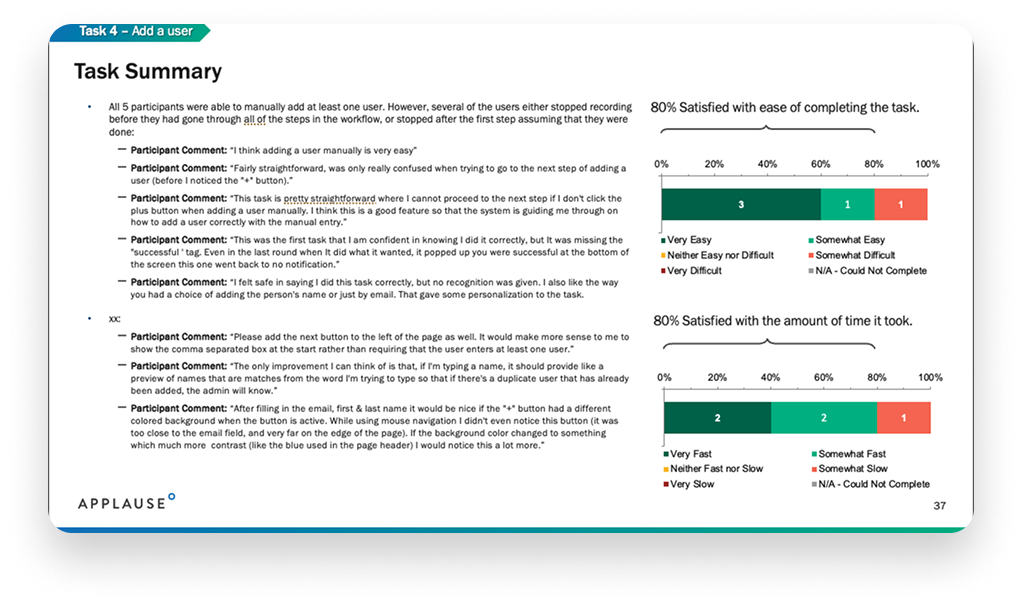
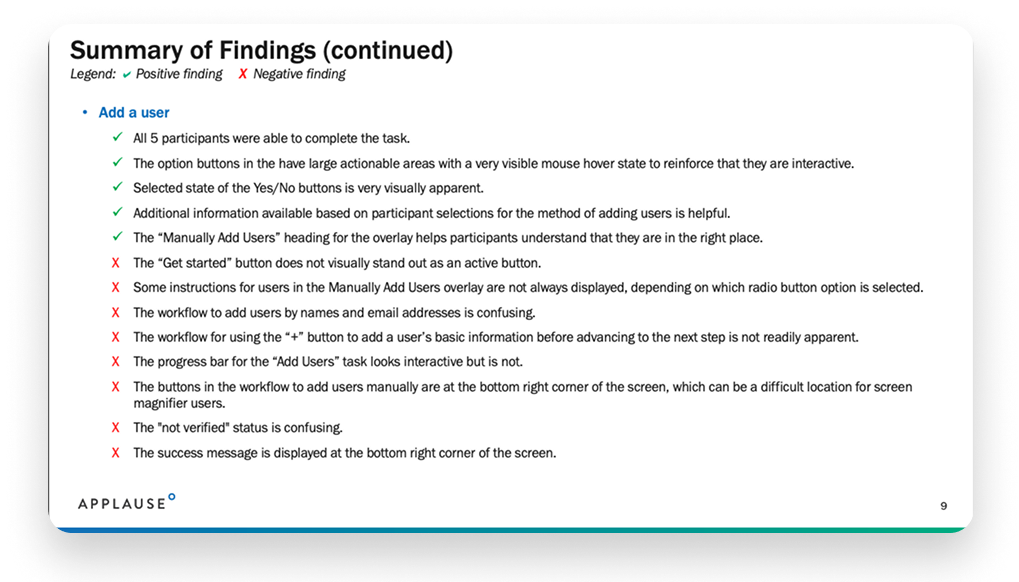
Another key element that helped us refine our approach was testing with people with disabilities. Kathryn from research facilitated these studies, which revealed the real-world impact of our efforts. One study, in particular, highlighted the importance of evaluating the entire page, not just individual components. As we worked through accessibility issues, we discovered that users were disoriented by how focus jumped across the page—a problem we would never have encountered without real-world testing.
Stage 2: Stay Accessible
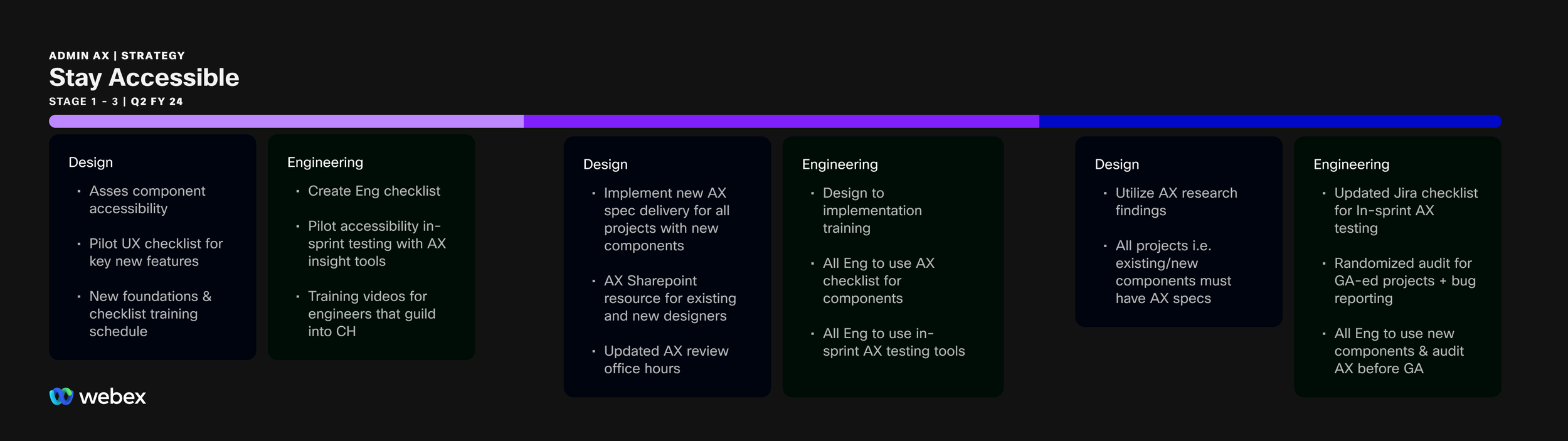
The primary goal of stage 2 was to uphold the momentum achieved in stage 1 and to shift our focus away from components and basic accessibility training to strategic adjustments to our design and delivery processes, thus ensuring our long-term accessibility and effectiveness.
This involved a careful balance of implementing processes and building tools to solidify our position for the future.
What we wanted to solve for
This phase focused on reducing friction to ensure our products are built with accessibility in mind which is why we focused on solving the below concerns:
“There is no clear guidance on what is required for accessibility”
“The few times I’ve provided specs ENG doesn’t know what to do with it”
“Just a suggestion, but would be nice if there was a central location where we could see an example of what we’re supposed to do”
Prep to stay accessible
As the groundwork was established, it was time to transition into the more complex challenge: preventing new accessibility debt while steadily tackling what still remained. This shift is where our OKRs evolved—moving beyond audits and fixes to focus on generating reusable resources, scalable patterns, and guidance that empower teams to build accessibly from the start.
Accessibility Checklists
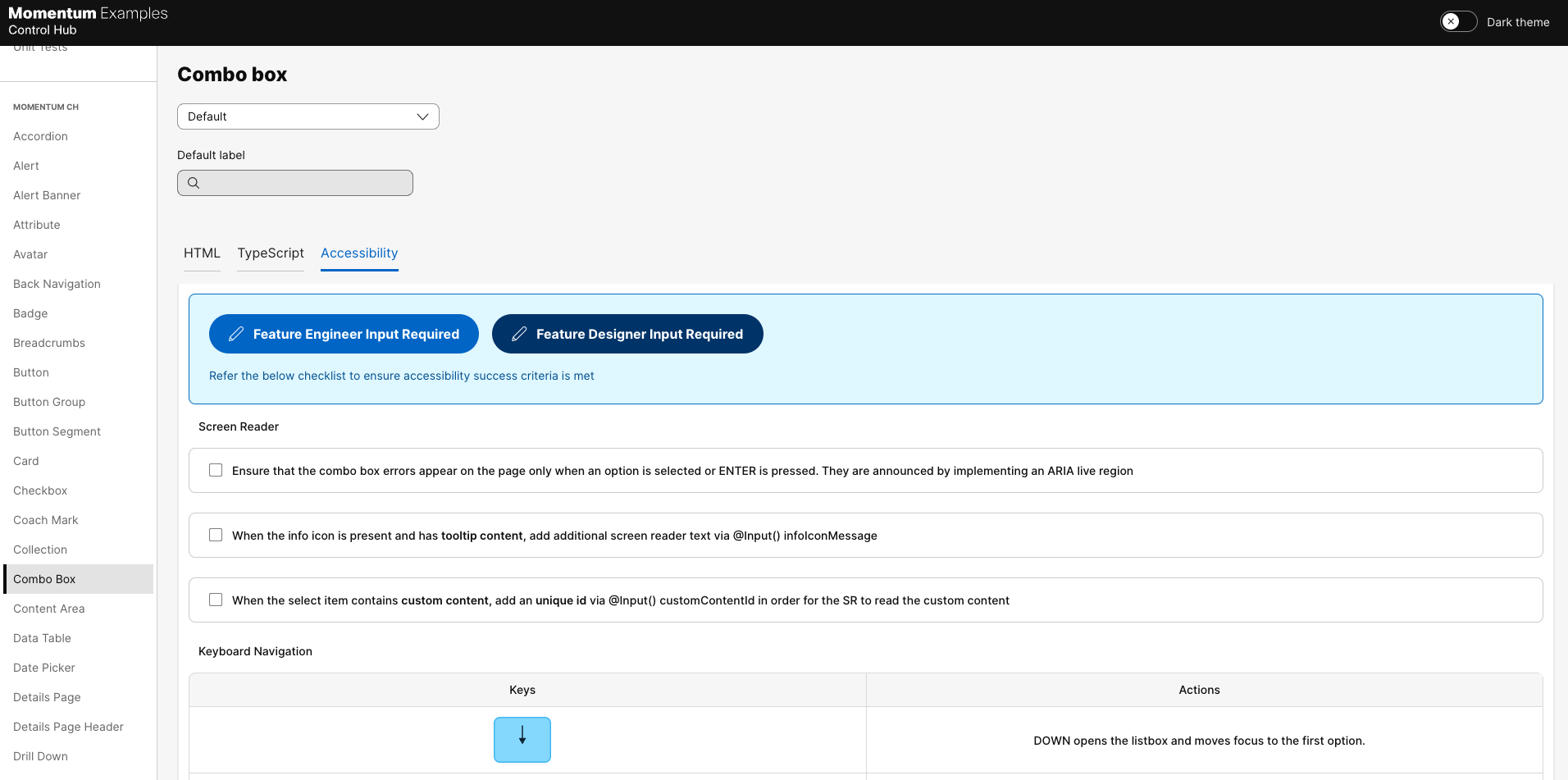
To help our team ensure they build accessible products we implemented checklists:
We created 3 design checklists and 2 delivery checklists that outline a set of guidelines and best practices to follow to make our products usable by everyone, regardless of their abilities.
In addition to design checklists, we also have engineering checklists that are required to be met before sending in your code for review
Accessibility Training
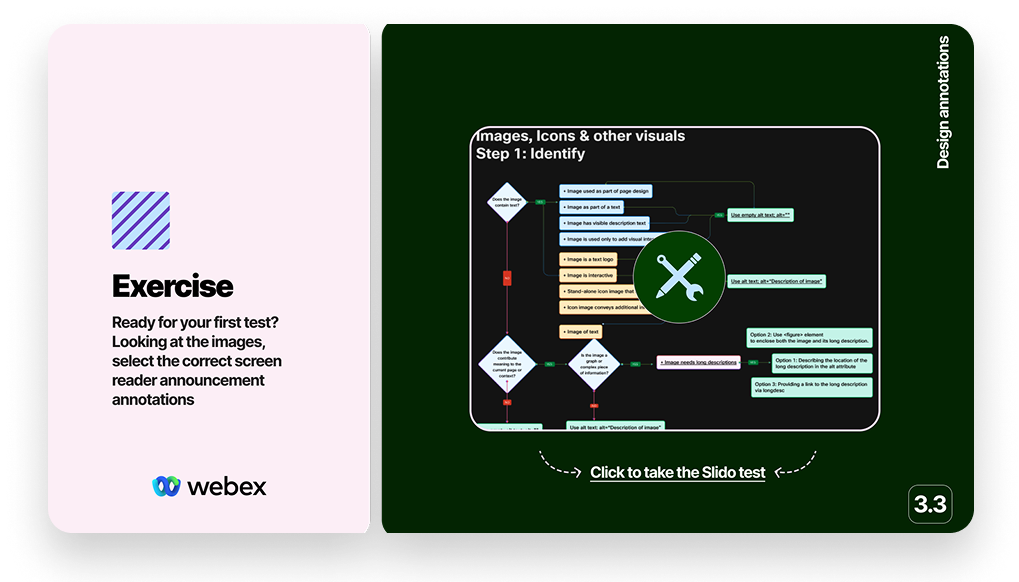
We also implemented bi-weekly training sessions to go over how to use the checklists and go over tips & tricks to create accessibility hand-offs
This also included both in-person training for engineers who consume figma specs and a self-paced program to learn about accessibility.
Accessibility Resource Hub
To help our team ensure they build accessible products we implemented checklists:
Training recordings
Component AX guidelines
Fast feedback readouts
Quarterly readouts
Testing and VPAT reports
Our plan to stay accessible
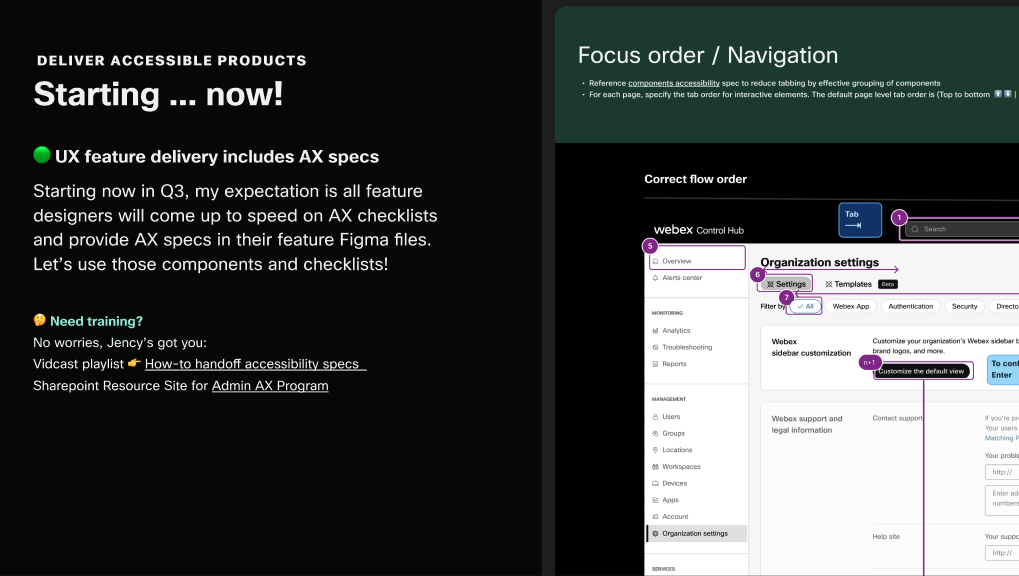
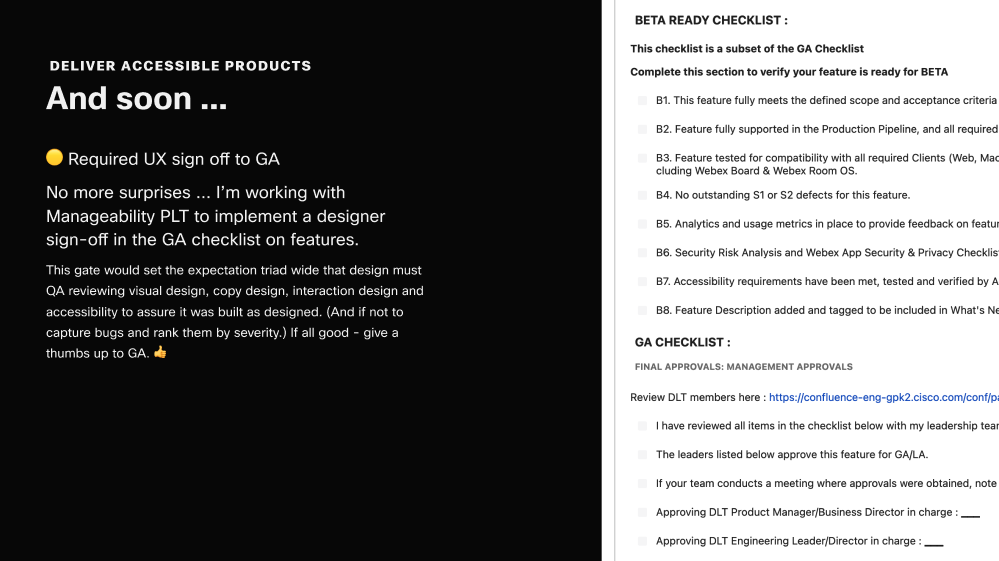
Deliver Accessible Features
To overcome accessibility challenges, we've introduced a new process. Now, all feature releases must be approved by designers, who also conduct quality assurance to embed accessibility into our design and development. This minimizes accessibility issues and improves the user experience.
In-sprint Accessibility Testing
All feature teams are required to conduct in-sprint testing and report on accessibility bugs.
In addition, we have the fit and finish project that reports on UX and accessibility bugs. We prioritize the pages and workflows with the most traffic.
Global Fixes
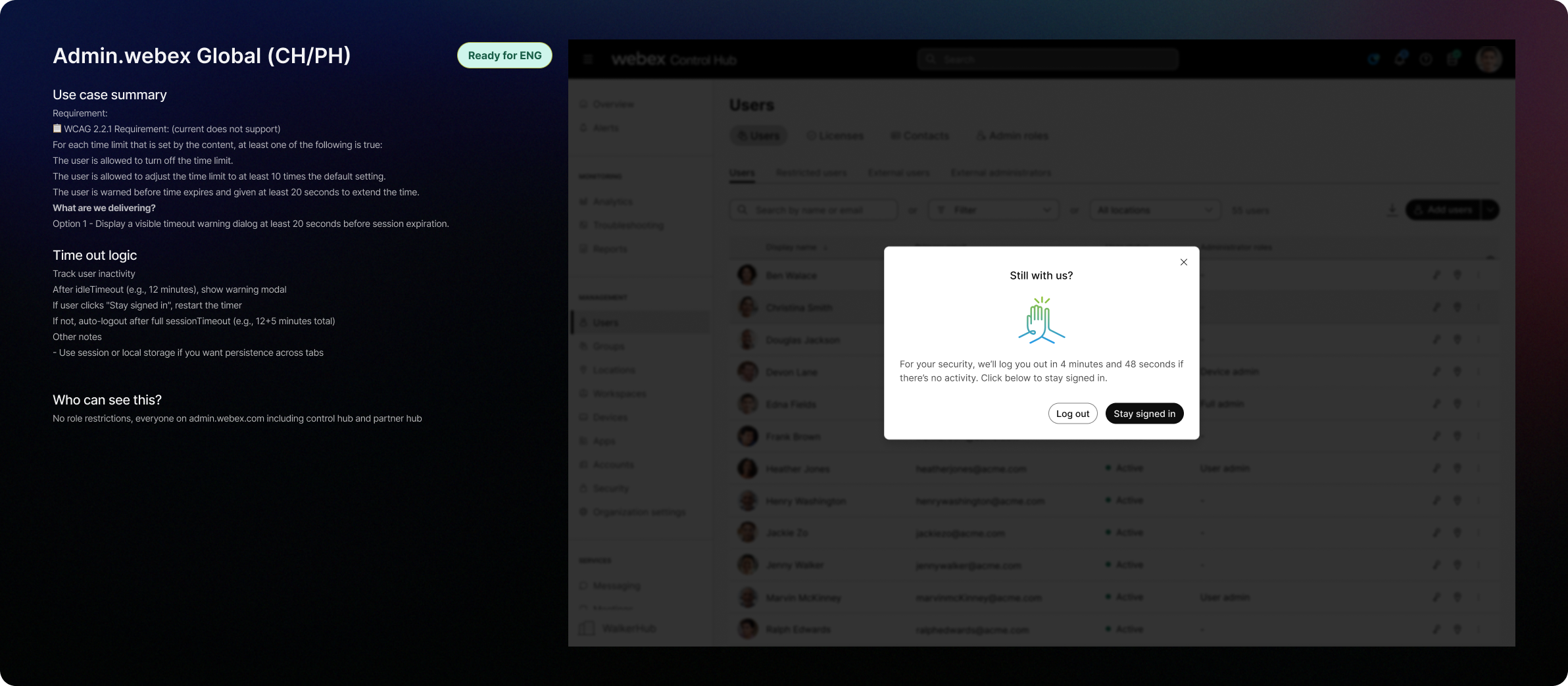
To address existing accessibility debt without overwhelming teams, we focused on one impactful global fix at a time. Examples include:
Fixing all incorrect heading (
<h>) tags for better screen reader navigationAdding a session timeout extension warning
Introducing a user setting to keep alerts from auto-dismissing
These targeted efforts helped us make meaningful progress while reinforcing accessible practices platform-wide.
High Traffic Fixes
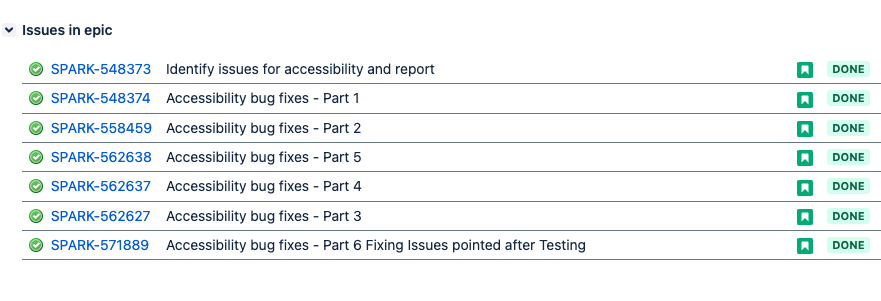
We identified the highest-traffic pages across the platform and mapped them to the product teams responsible for each. We then assigned clear accessibility commit requirements to those teams—ensuring accountability and focus where user impact is greatest. This helped distribute ownership, align priorities, and make meaningful progress faster.
The Impact
The testament to how small steps toward progress can have a compounding impact (as of Q3 FY24)
24
Designers trained
52
Components made accessible
6+
Research studies conducted with differently-abled people
9+
Months of accessible features Implemented.
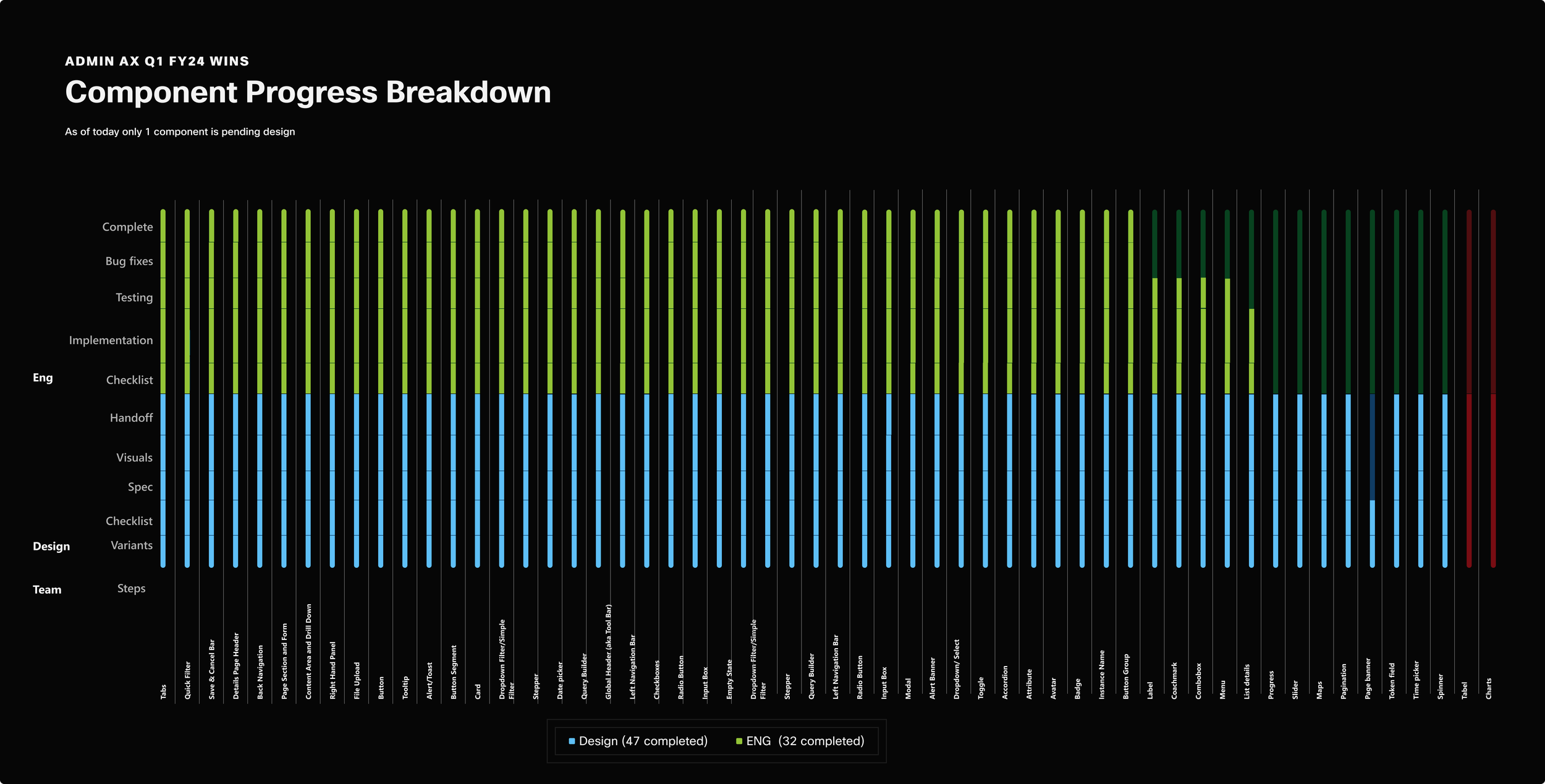
Accessible Components
Investing in creating fully accessible components not only reduces the designer's workload but also significantly improves accessibility for all users.
With fully accessible components, the overall design process becomes more streamlined, allowing designers to focus on creativity and innovation rather than constantly retrofitting designs for accessibility. This shift not only benefits users but also creates a more efficient and sustainable design process.
A quick before and after of the Toast and Global header components shows us how accessibility efforts informed the overall usability of the components.
Toasts / Alert : Keyboard + Usability demo
Truncated toasts
Enhanced keyboard support
Ability to disable auto-dismissal for success toasts
Global Header: 400% zoom / reflow demo
Enhanced keyboard support
New menu collapsed view + avoid cutting off function
A demo of our components before and after running it through the accessibility process
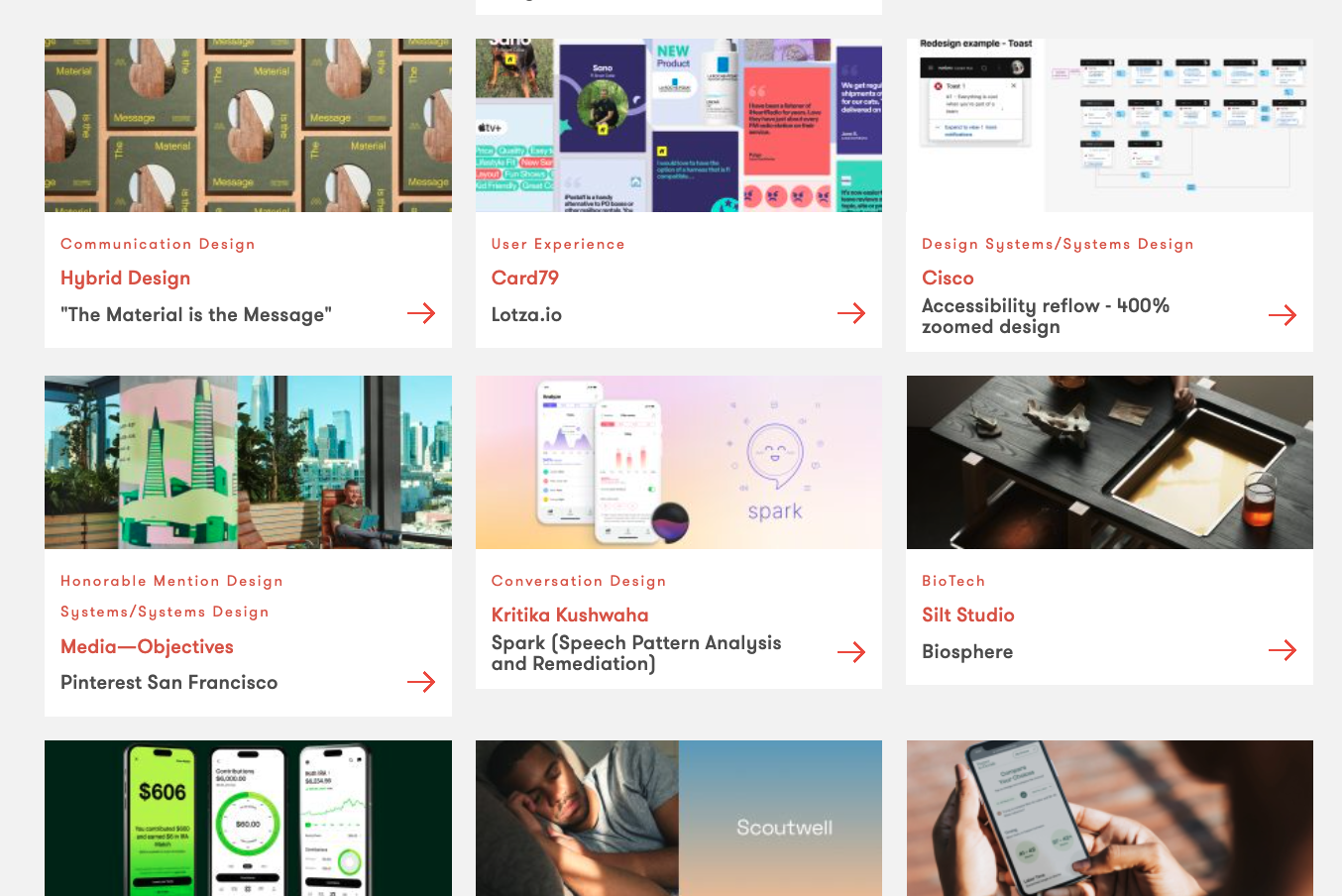
SF Design Awards
The accessibility efforts, specifically to ensure we design for reflow and resizing won the SF Design Awards 2023 under the Design Systems / Systems Designs category
https://sfdesignweek.org/awards/accessibility-reflow-400-zoomed-design/
Trained Designers
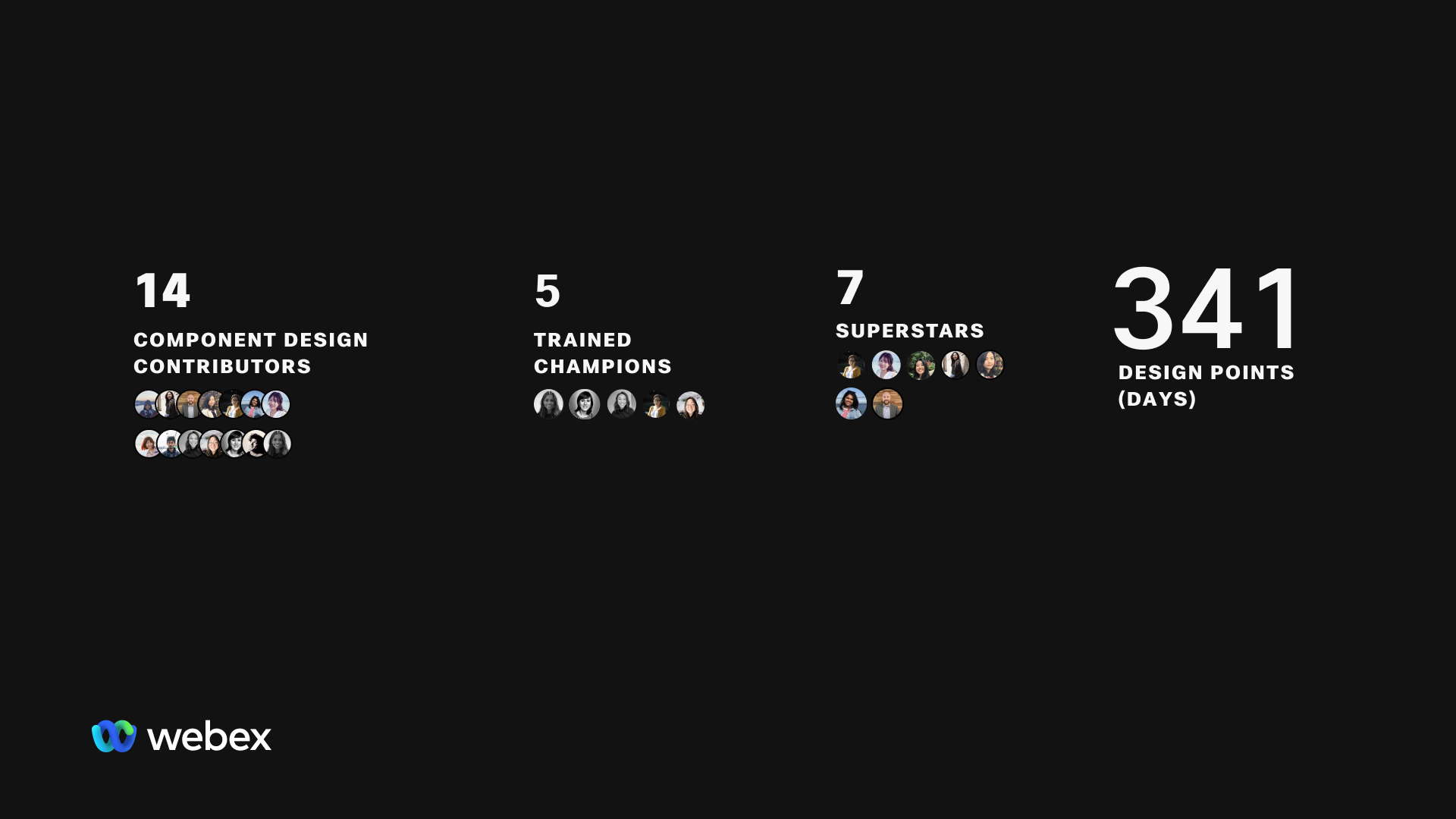
Through hands-on training sessions, our designers learned how to develop accessible components that prioritize inclusivity and usability for all individuals.
By instilling best practices and practical techniques, we aim to ensure that our designs are fully accessible, meeting the diverse needs of all users. This initiative reflects our ongoing commitment to fostering an inclusive design environment and delivering high-quality, accessible solutions for our clients.
With the new process designers and engineers spend less than 2 points to ship accessible products.
The Power of Process
In the past, accessibility efforts sometimes felt like playing catch-up. New regulations or industry standards would emerge, forcing us to scramble and retrofit existing products. But everything changed when we implemented a robust accessibility process. This wasn't a one-time fix, but a comprehensive strategy woven into the fabric of our development cycle. From concept brainstorming to final testing, accessibility considerations became a constant companion.
This commitment proved invaluable when the FCC dropped its announcement that all audio and video software must be accessible by September 2024. While the news sent most of the product teams into multiple fire drills, we felt a wave of quiet confidence. Our ongoing accessibility process meant we weren't starting from scratch. We already had the tools, training, and awareness embedded in our workflow. Thanks to the power of process, we were well-equipped to meet the deadline and even exceed expectations by creating truly inclusive audio and video experiences for everyone.
Culture shift
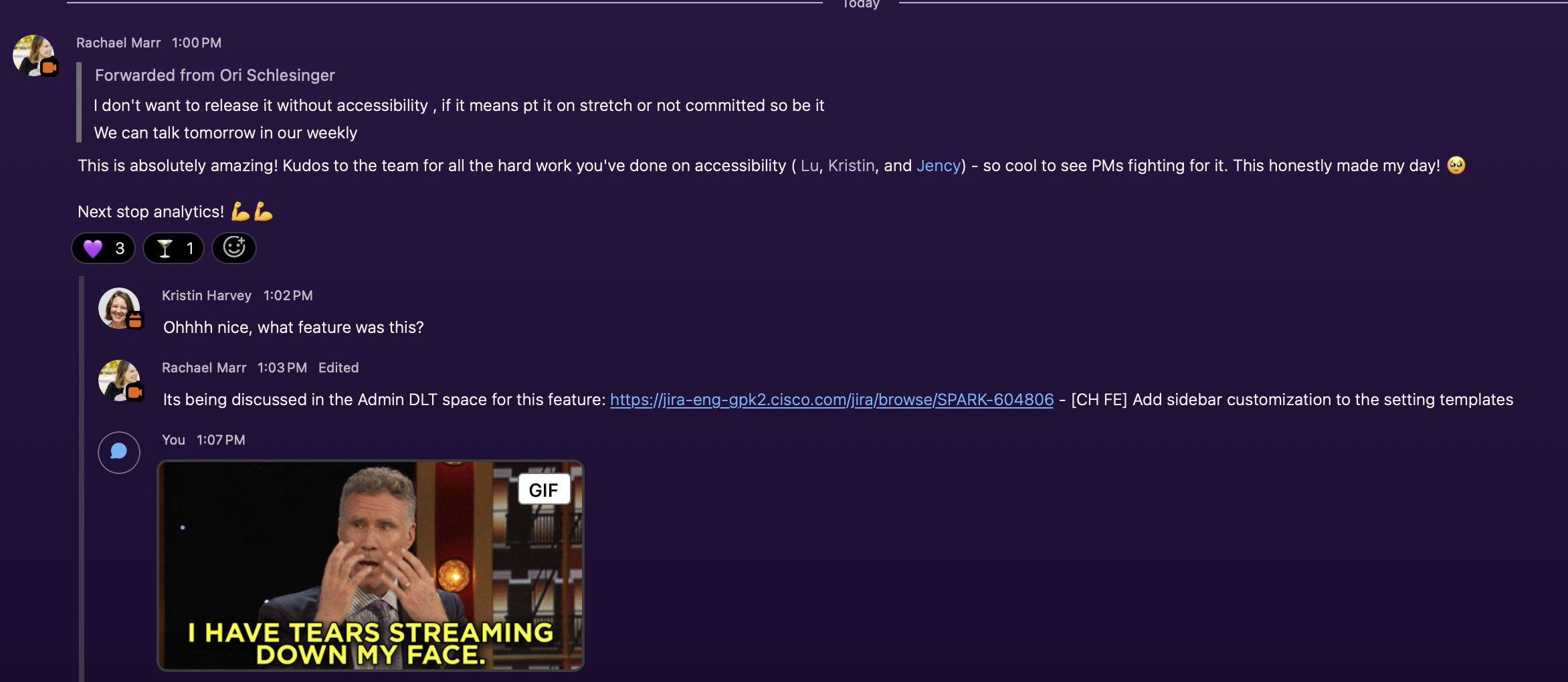
The Accessibility program we built fundamentally transformed our product culture, making accessibility a non-negotiable part of our development process. What was once seen as a feature is now an expectation, with PMs, engineers, and designers all advocating for accessibility to be complete before any feature ships.
This shift didn’t happen overnight—it was the result of intentional strategy, education, and a commitment to embedding accessibility into our workflows. By setting clear standards, providing the right tools, and fostering accountability, we established a culture where inclusive design is second nature.
The impact of this program goes beyond just our immediate team; it has positioned us as leaders in this space and created a foundation that will outlive our time at Cisco, ensuring that accessibility remains at the core of how we build for years to come.
Where are we Today?
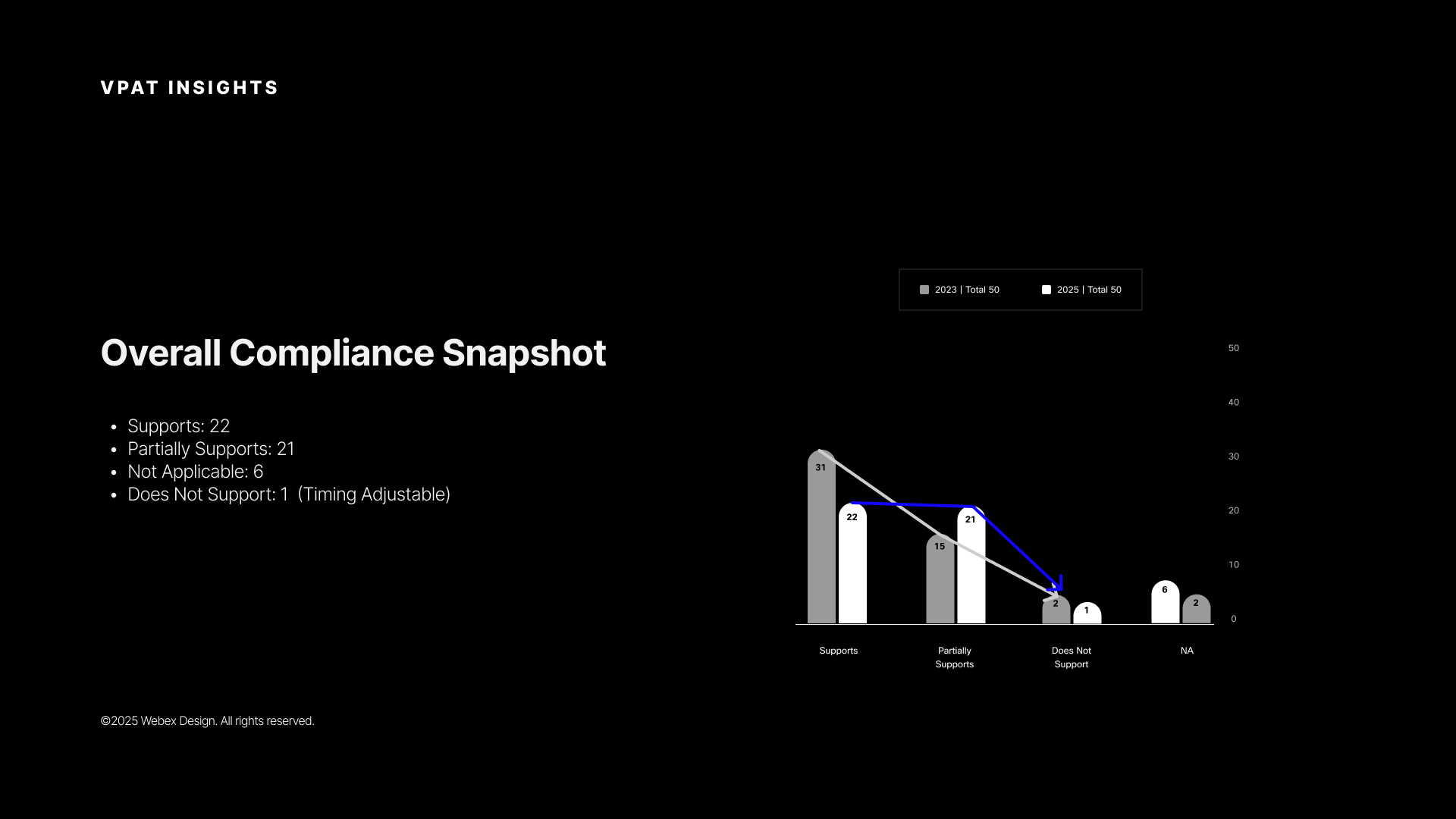
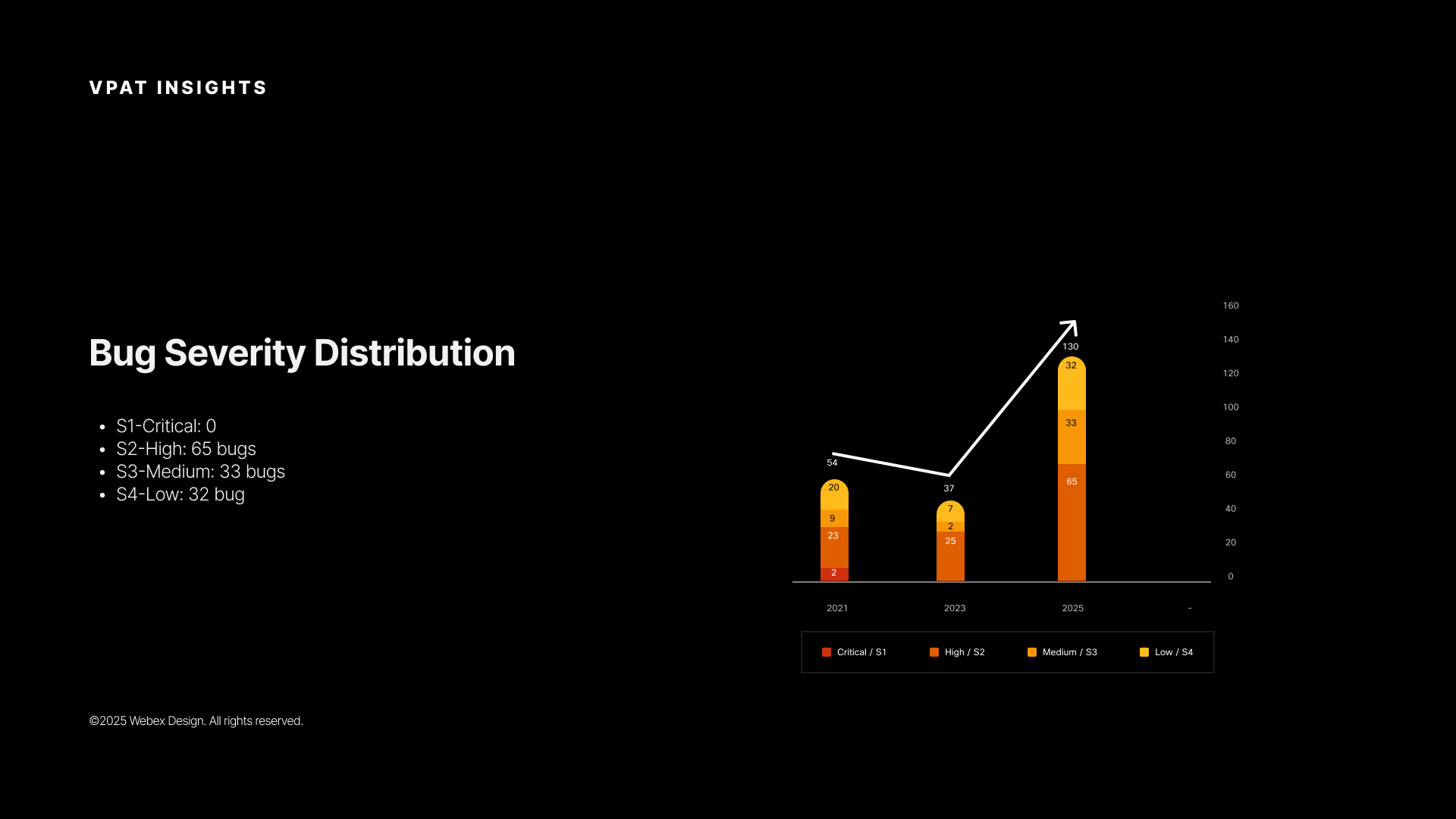
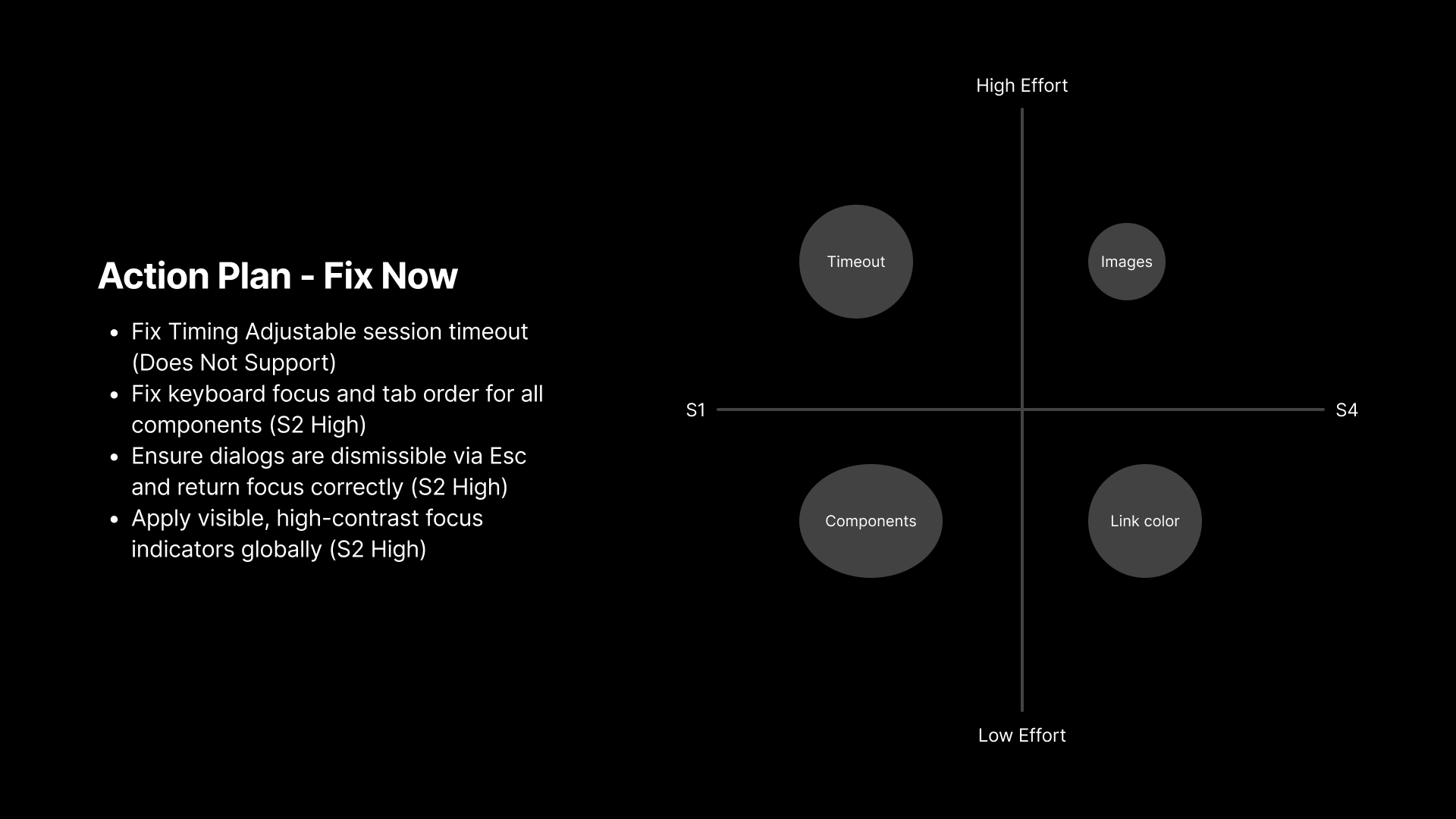
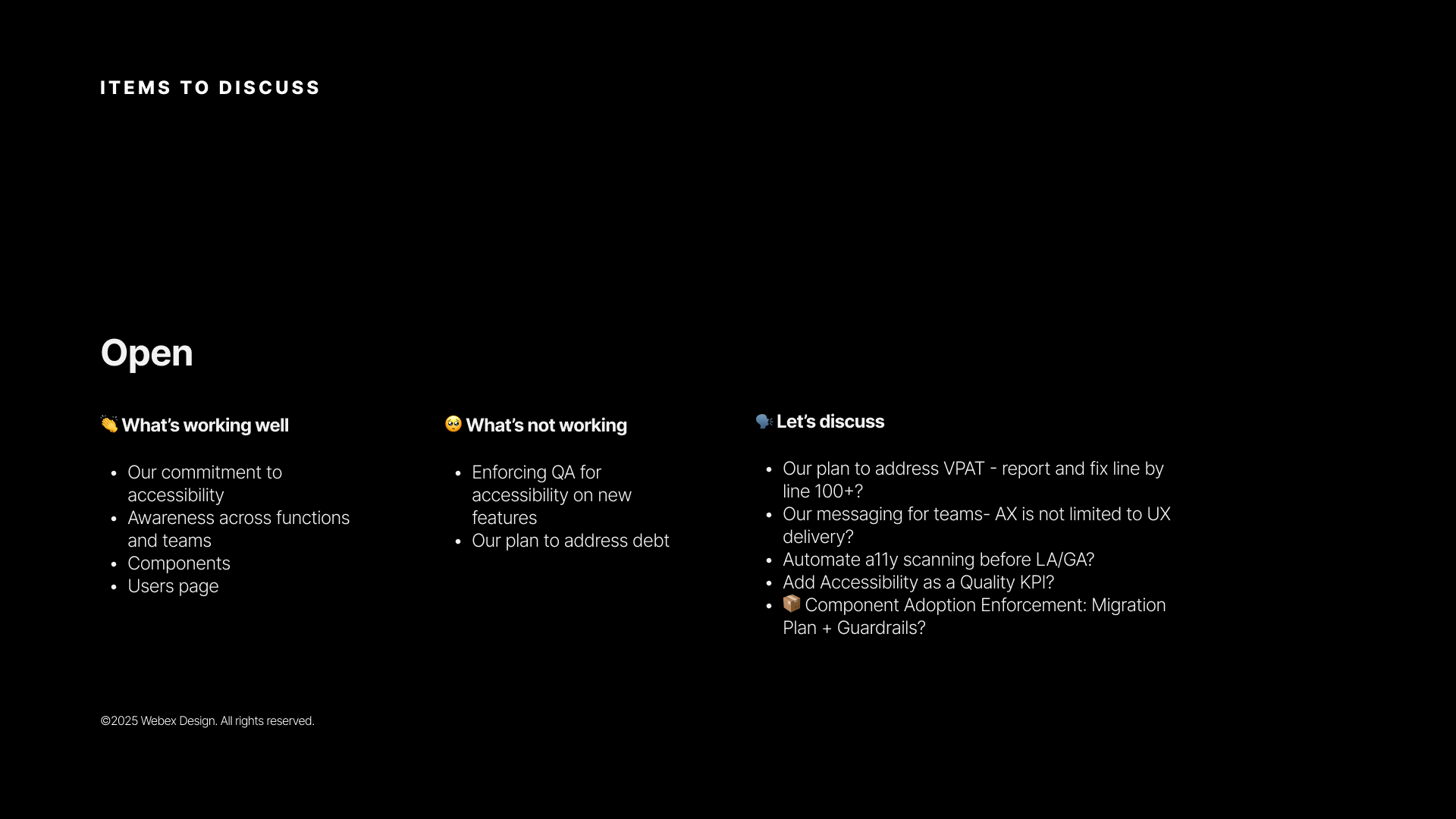
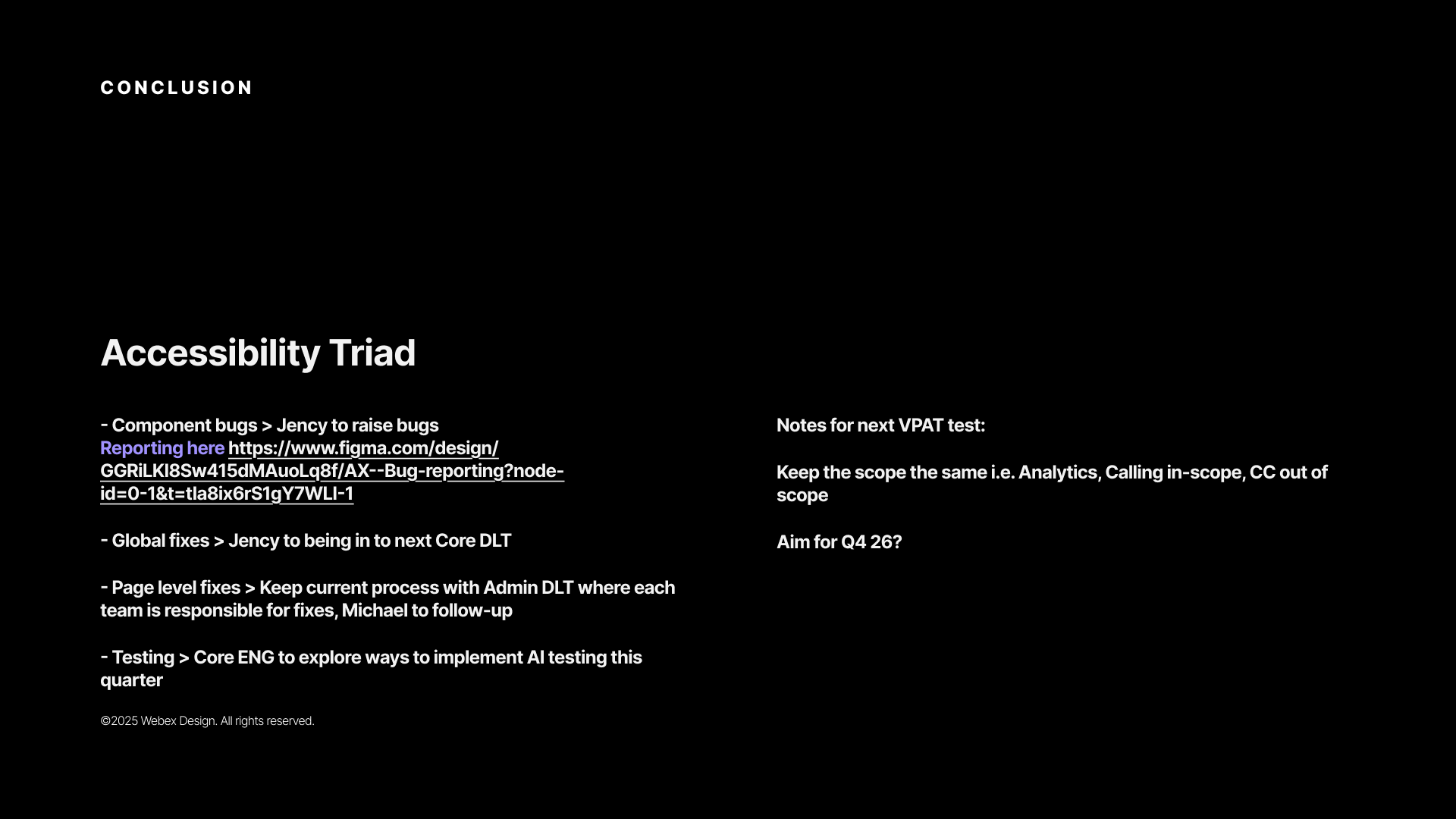
We’re still making steady progress—chipping away at accessibility debt, supporting teams with scalable resources, and embedding inclusive practices into how we build. It’s a slow, often complex process that’s required grit, cross-functional collaboration, and a willingness to learn and adapt. As part of our ongoing strategy, we’re running VPAT assessments to evaluate our current state, identify gaps, and guide our next steps. Accessibility remains a journey, and we're committed to growing with it—one step at a time.
Spotlight on Our Success
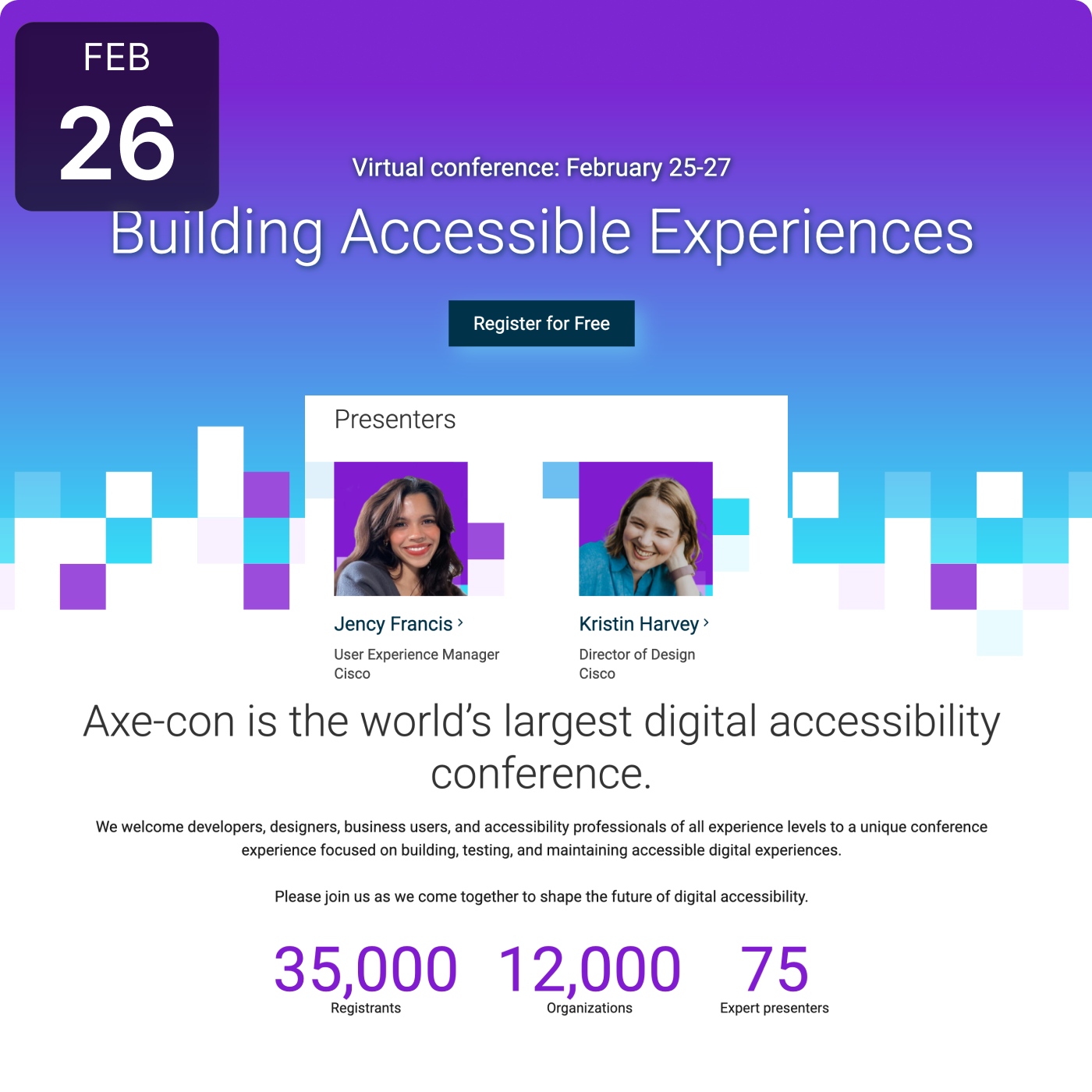
We had the opportunity to showcase our accessibility program twice, first at dzone, Cisco’s only design focused conference with over 1,000 attendees, and again on a global stage at axe-con, reaching 35,000 registrants across 12,000 organizations and 75 countries.

My Role
Role: Leader of Product Design, Partner/Wholesale experiences & Programs @ Platform UX
As program lead, I:
Defined the strategic roadmap and guided the vision to make accessibility a default, sustainable practice
Managed cross-functional execution, coordinating efforts across design, product, and engineering
Established quarterly OKRs to track progress against key goals and ensure accountability
Reduced design and tech debt by embedding accessibility reviews and standards into the product lifecycle
Transformed accessibility into a shared responsibility, supported by scalable tools, training, and a strong design–engineering alliance
Hungry for more?
If you missed the talks, don’t worry—here are some related stories that dive deeper into our journey and impact.